Thursday, August 28, 2014

Homeostasis

This picture is of  a couple of volleyball players after a three hour practice. Athletes usually sweat during a practice due to lots of exercise and the hot, Bruton gym. An athlete's sweat is an example of homeostasis, which is the body's ability to maintain constant conditions such as temperature and blood pressure.When a person's, or athlete in this case exercise, temperature increases, the body attempts to cool off causing the sweat glands become activated, creating sweat.

Wednesday, August 27, 2014

Altruistic Behavior

This picture is of guinea hens, which is a type of bird. Numerous bird species act using altruistic behavior, which is when a species's behavior benefits another species, at a cost to itself. New bird parents usually receive help in raising its young from other birds. They help to protect the nest from predators and help feed the newborns, after they hatch.

Niche

This is a picture of a bee. A bee represents a niche. A niche is an organisms role in their environment. A bee's niche is to collect nectar in order to make honey, in doing so, they also pollinate flowers and plants.

Lipid Used for Energy Storage

This is a picture of oil, such as canola oil and olive order. Oil, such as the olive or canola oil found in an everyday kitchen, is an example of a lipid, because it is composed of triglycerides that allow animals to produce facts that sore energy. A lipid is a fatty or waxy organic compound that is soluble in non-polar solutions.

Keystone Species

This is a picture of a sea otter. A sea otter is an example of keystone species, which are species that are very influential part of their habitat. When a keystone species is removed from a habitat, the habitat is dramatically changed. Sea otters are keystone species usually found in the kelp forests. These animals help control the sea urchin population, who eat kelp - a major food source in the habitat.

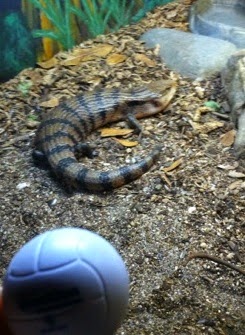
Ectotherm

This picture is a blue-tongue skink. A blue-tongue skink is an example of an ectotherm. An ectotherm is a cold-blooded animal, meaning that they are dependent on the environment around them to control their body temperature. A blue-tongue skink is a reptile who body temperature varies with the temperature of its surroundings.

Adaptation of an Animal

This is a picture of a giraffe. A giraffe's long neck is an adaptation of an animal. An adaptation is the ability an animal (in this case, but it applies to all organisms) has that allows them to change or adapt to their surrounding. A giraffe has evolved and have developed a longer neck to reach the nutritious leaves or plants that are usually high up in the trees.